


The Riverina in New South Wales is home to approximately a quarter of Australia’s total winegrape production.
While this region’s warm-to-hot climate isn’t celebrated for its vintages, the conditions offer a special opportunity for an industry eager to remain globally competitive amidst a changing climate.
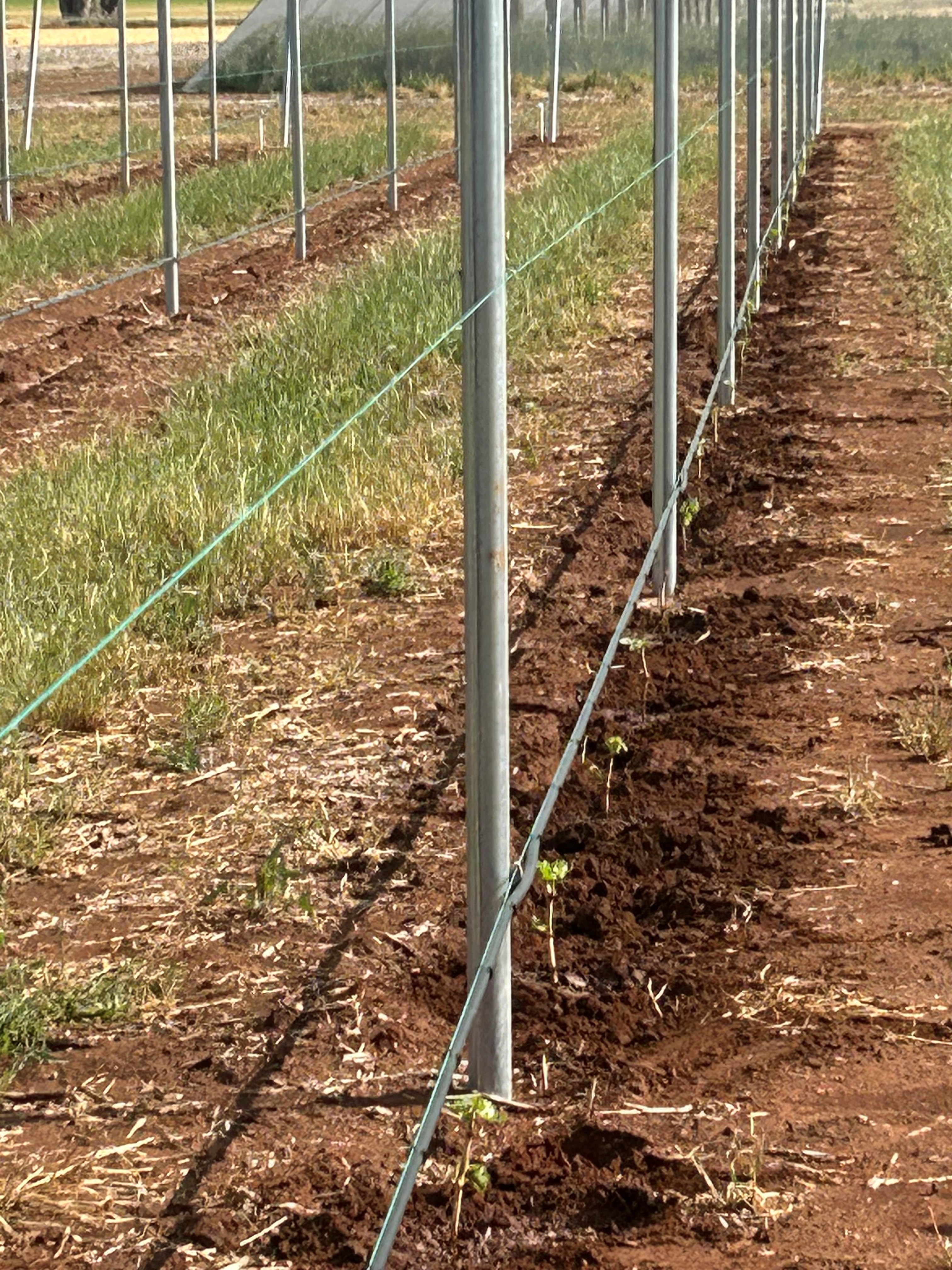
It's why Wagga Wagga is the home of the Vineyard of the Future, as it has been dubbed. Although currently a small block of land with a few green shoots, it's what lies ahead that has AgriPark’s Martin Gransden excited.
“The Vineyard of the Future gives industry the ability work with world class partners, innovators, suppliers and researchers to meet the challenges we face now and will face in the future,” he explains.
It's here that this collaborative project with Charles Sturt University and Wine Australia will test a range of new and emerging technologies and growing techniques will be tested and validated, before being released to the broader industry.
Among the plantings are first generation disease resistant varieties bred for Australian conditions by CSIRO, as well as classics such as Vermentino, Chardonnay and Pinot Gris for white wine lovers, and Grenache, Touriga Nacional, Nero d’Avola and Shiraz for those who enjoy red.
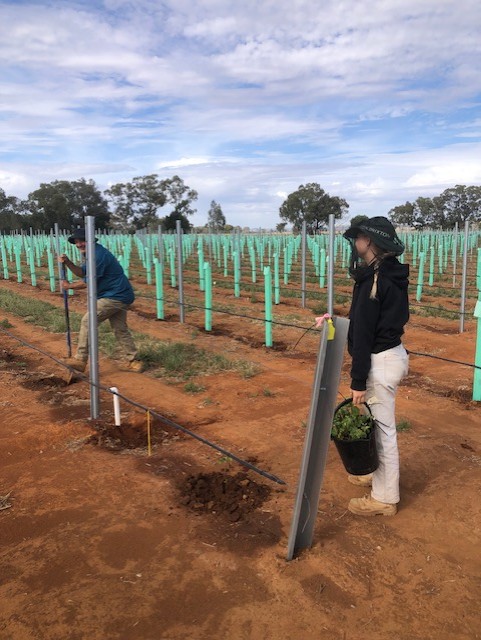
Eco Trellis and Ocloc trellising have allowed the growers to replicate what modern and future vineyards in Australia will look like.
Some of the varieties that have been planted aren’t necessarily what you’d expect to find in a climate like this, but that’s what makes Mr Gransden optimistic about the project.
“We were deliberate in planting a few varieties better suited to cooler climates to assess how they perform against more heat tolerant varieties in a warm growing environment,” he says.
Aside from the vines, a range of technology solutions have also been installed to assist the growers in assessing a range of different factors.
“We’ve installed soil moisture probes both under-vine and in the mid-row, a weather station and a sensor to generate a plant water index,” says Mr Gransden.
“The data these sensors record (along with others) will flow through the Australian Agriculture Data Exchange (AADX) on to a dedicated online dashboard in real-time to help make critical viticultural decisions on irrigation, water, pest and disease management.
“This allows grape growers to measure the benefits of sustainable vineyard practices and any carbon capture insets or gains,” says Mr Gransden.
Another feature of the new data hub platform is to allow the seamless integration of several wine industry data sources into one interface, with a decision support tool for investment, operation and research outcomes.
“This will allow for verifiable and certifiable sustainability data to be captured and communicated,” explains Mr Gransden.
And although the first commercial harvest of grapes isn’t expected until 2028, Mr Gransden says the project has laid the foundation for a more sustainable future.
“Through the Vineyard of the Future, we’ll be able to understand and develop new varieties that are better suited to our climate and resistant to disease,” he says.
“We’ll also discover new grape growing and winemaking technologies, and real-time data helping to best manage our resources whilst growing better fruit that leads to better wine.
“I want to see the wine industry's evolution keep pace with other Australian agricultural industries and to remain competitive on the world stage, and I believe the Vineyard of the Future will achieve that,” adds Mr Gransden.
For more information or to find out how you can be involved, please contact projects@foodagility.com.

