
Beginning in 2026, Charles Sturt University’s innovation ecosystem, AgriPark, will assume exclusive management of both the Global Digital Farm (GDF) and the Renewables in Agriculture Centre of Excellence (RenCoE).
Developed in collaboration between Food Agility CRC and Charles Sturt University, these two initiatives were designed to harness world-leading research to unlock the power of data, digital and renewable energy technology to help prepare Australian farmers to thrive in a future dictated by accountability, sustainability, and productivity.
As Food Agility enters its wrap-up phase, with Commonwealth funding ending in March 2027, the decision was made by both parties to transition the management and delivery of projects across both portfolios to Charles Sturt effective 1 January 2026.

Over the last four and a half years the GDF was the test bed for multiple projects, including Wagga Wagga based technology company Zetifi which trialled WiFi antennas built in partnership with the University of Technology Sydney’s RFCT Lab. This project has transformed roof racks into mobile hotspots, enabling reliable digital connection on-farm in regional areas.
The collaboration with Australian agritech and remote sensing specialists Farmbot has reduced the time it takes to identify water-leaks on-farm, improving the lives of Australian farmers in the process.
Meanwhile, the GDF provided the real-world conditions for one of Australia’s leading farm insurers, IAG, to work with connectivity provider Myriota in creating an accurate and affordable way to measure haystack degradation. Prior to this project, farmers would stick a crowbar in their haybales to take the temperature and understand if spontaneous combustion was likely to occur. This project devised a better and more accurate way to manage that uncertainty.
These three projects have an estimated impact of $59m to the Australian agrifood sector per annum, and have helped to establish deep connections between industry, business and research.

Launched at evokeAg in 2024, RenCoE was established to unlock the value of renewable energy technology to help address challenges relating to energy security, organic wastes and chemicals.
Beginning with the Agri-Renewables Innovation Challenge, in partnership with Race for 2030 CRC, this centre will launch three research innovation anchor projects in early 2026 addressing concentrated solar thermal for process heat, rapidly deployable and transportable solar and battery system and modular hydrogen production, and a fuel cell plant that will drive our sustainable future.
To highlight the innovation and industry-leading research occurring both locally in the Riverina and across the country, Food Agility and Charles Sturt also created the Digital Agrifood Summit.
Three events were delivered between 2022-2024, laying the foundation for what has become one of Australia’s leading regional events, offering technical demonstrations and expert advice for researchers, industry, and producers alike. Food Agility handed over the reins to Charles Sturt following the completion of the 2024 Digital Agrifood Summit.
Both parties remain committed to delivering the ongoing suite of CRC supported projects, which are on track to be completed by November 2026.
Dr Mick Schaefer, CEO, Food Agility CRC
“The Global Digital Farm and RenCoE initiatives are the cornerstone of our collaboration with CSU over the last four and a half years. They served as the ideal launchpad for innovative research projects as well as a resource that industry and companies have been able to use to develop their own products for the agriculture industry.”
Professor Neena Mitter, Deputy Vice-Chancellor, Research, Charles Sturt University
"The Global Digital Farm and RenCoE have developed into powerful differentiators for Charles Sturt. They combine digital infrastructure, industry co-investment and regional context to accelerate the delivery of solutions that matter to farmers and our regions. I’m looking forward to the next stage of this journey as we strengthen pathways from innovation to adoption with our industry partners."
Prof. David Lamb, Deputy CEO and Chief Scientist, Food Agility CRC
“The Global Digital Farm represents Australia’s first university SMART Farm focussing on grain farming, building upon Charles Sturt’s long-term leadership in precision agriculture R&D. That, mixed with the experience of Food Agility, made for an excellent opportunity to collaborate.”
Mark Bourne, Director, Global Digital Farm, Charles Sturt University
“The Global Digital Farm has demonstrated what’s possible when industry, research and technology providers work together on real farming challenges. We are well positioned to build on these foundations and continue delivering practical innovation that makes a genuine difference for Australian producers. The partnerships and capabilities developed over the past four years has given us an excellent platform for the next chapter of agricultural technology research, development, extension and adoption.”
Stephen Summerhayes, Director, Renewables in Agriculture Centre of Excellence
“RenCoE is a pioneering initiative that aims to de-risk agri‑renewables for farmers, tech providers and investors while giving students and academics real‑world research opportunities that strengthen farm sustainability and regional resilience.”
Matt Muller, Director, Cool Soil and Sustainability, AgriPark
“The Agri-Renewables Innovation Challenge created an outstanding platform at Charles Sturt University to establish our foundational work in renewable technologies. As we look to 2026, we’re excited to showcase these innovations and projects across our campus farm and operations to support productivity and practical adoption on the ground.”

The Global Digital Farm (GDF) is a 1,600-hectare working mixed farm and teaching/research facility located at Charles Sturt University’s Wagga Wagga campus. Established in 2021 as a collaboration between Food Agility CRC and Charles Sturt University, the GDF serves as Australia’s first university SMART Farm focused on driving productivity, profitability and sustainability in the agricultural sector.
The facility provides a real-world testing environment where agricultural technology companies, researchers and industry partners can trial and validate digital innovations under authentic real world farming conditions. With comprehensive connectivity infrastructure, sensor networks and data systems, the GDF enables projects spanning precision agriculture, remote sensing, IoT applications, and agricultural data interoperability.
The GDF continues its mission to accelerate the adoption of digital technologies that improve productivity, sustainability and profitability for Australian producers.
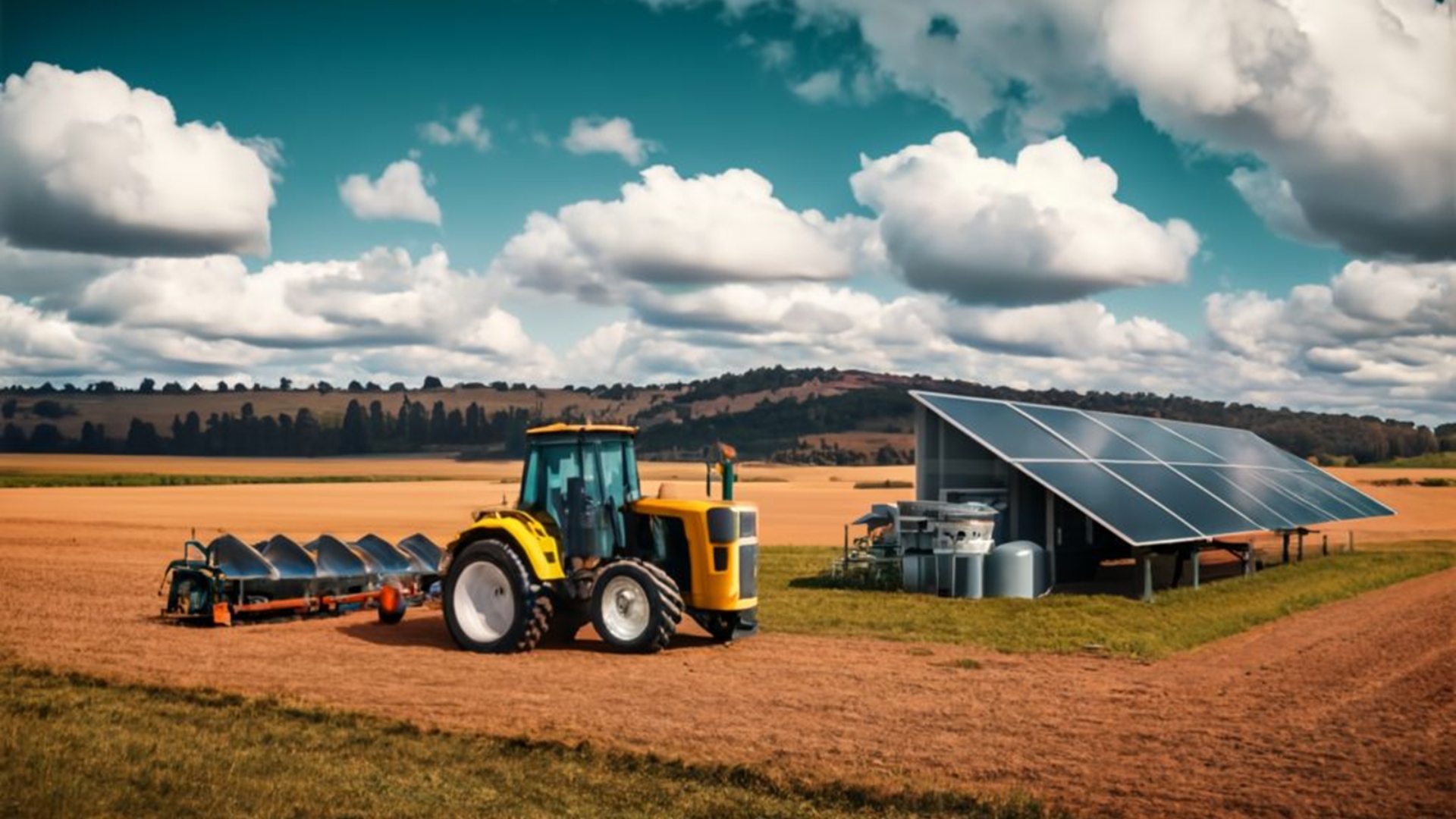
The Renewables in Agriculture Centre of Excellence’s (RenCoE) ambition is to accelerate the adoption of renewable technologies in agriculture—lifting farm profitability while reducing exposure to fuel price volatility, grid constraints, and connectivity risk. Bringing together farmers, researchers and industry, RenCoE will operate as an open-innovation, on-farm proving ground at Charles Sturt University’s Wagga Wagga campus, enabling product development, training and practical demonstrations that work in real farming conditions.
RenCoE’s program is built around four outcomes:
From 2026, the first demonstration round will focus on renewable process heat, transportable solar-and-battery microgrids for remote operations, and modular green hydrogen energy storage and fuel-cell systems.

